


5 Ingredients That Should Never Be in Your Pet's Bowl (And What to Feed Instead)
Author: PawPots Team
 26 Oct 2026
 6 min
Flip your dog's food bag over. Go on, we'll wait. If the label reads like a chemistry exam, you're not alone, and it's exactly why so many pet parents in Lebanon ask what is dog food made of in the first place. Some of it is great stuff. Some of it has no business near your best friend's bowl. Here are the five ingredients we'd ditch first, and what to serve instead.
What Is Dog Food Made Of, Really?
Most bagged food has the same basics: a protein source, a carb source, fats, and a vitamin and mineral mix. Then come the extras that keep it shelf-stable, colorful, or extra tasty. Those extras are where the trouble hides.
Ingredients are listed by weight, so the first five on the label tell you the most. You want to see real, named meat near the top. If you can't picture where an ingredient came from, that's a hint.
The 5 Ingredients to Skip
1. Artificial Preservatives (BHA, BHT, and Ethoxyquin)
These stop fats from going rancid, which is why they show up in long-life kibble. The good news is you don't need them. Mixed tocopherols (vitamin E) and rosemary extract do a similar job. If you spot BHA, BHT, or ethoxyquin on the label, that's a quick pass.
2. Artificial Colors
Your dog doesn't care if a kibble piece is bright red. You do. Dyes like Red 40, Yellow 5, and Blue 2 add zero nutrition and exist purely to make the food look pretty to humans. Real food has real color, and it's usually a bit more beige.
3. Vague "Meat" or "Animal" Ingredients
Words like "meat meal," "animal digest," and "poultry by-product" don't tell you which animal you're feeding. Today it could be chicken. Next batch, who knows? Named proteins like chicken, beef, or lamb let you see exactly what's going in, which matters a lot for picky eaters and sensitive tummies.
4. Heavy Fillers at the Top of the List
Corn gluten meal, wheat middlings, and soy hulls are cheap bulk. Grains aren't evil, and plenty of dogs do fine with them. The red flag is when fillers outrank real meat and the protein comes mostly from plants. Your dog is still a dog, and meat should lead the way.
5. Added Sugar and Sweeteners
Corn syrup and sugar pop up in semi-moist food and treats to make them extra tempting. Then there's xylitol, a sweetener found in some peanut butters and sugar-free snacks. It's toxic to dogs, even in small amounts. Always check labels before sharing human snacks, and call your vet right away if your dog eats something with xylitol.
Natural Dog Food vs. Regular Kibble: What's the Difference?
Ingredients: Natural dog food leans on whole foods like real meat, veggies, and seeds. Regular kibble often leans on meals, fillers, and add-ins.
Processing: Kibble is cooked at high heat and pressed into pellets. Fresh food is gently cooked and portioned, closer to what you'd make at home.
Moisture: Fresh meals hold more natural moisture. Dry kibble is, well, dry.
The word "natural": It can mean different things on different bags. Read the ingredient list, not the front of the package.
Neither is automatically a villain. The best food is the one with a clean label, named meat, and a complete nutrient profile.
Is There Such a Thing as AAFCO Approved Dog Food?
Here's a fun twist. AAFCO doesn't approve or test pet food brands. It sets the nutrient standards that foods are formulated to meet. So when people search for AAFCO approved dog food, what they really want is food that's "complete and balanced" for their dog's life stage.
Look for that statement on the label. It means the recipe covers everything your dog needs every day, not just a tasty topper. PawPots recipes are made to be complete and balanced, following the AAFCO standards.
What About a Dog Food Recall?
A dog food recall happens when something goes wrong, like contamination with salmonella, mold toxins such as aflatoxin, or a mistake in the nutrient mix. It's scary, and it's one of the reasons label reading matters.
A few easy habits help:
Keep the bag or the batch details until the food is gone.
Follow your food brand on social media and sign up for their updates.
Check recall lists for imported brands, like the FDA's page.
Stop feeding and call your vet if something seems off.
A short ingredient list is also easier to trace than a long one full of mystery items.
What to Feed Instead
Look for named meat first, then veggies, seeds, and healthy oils. No dyes. No mystery meals. No fluff.
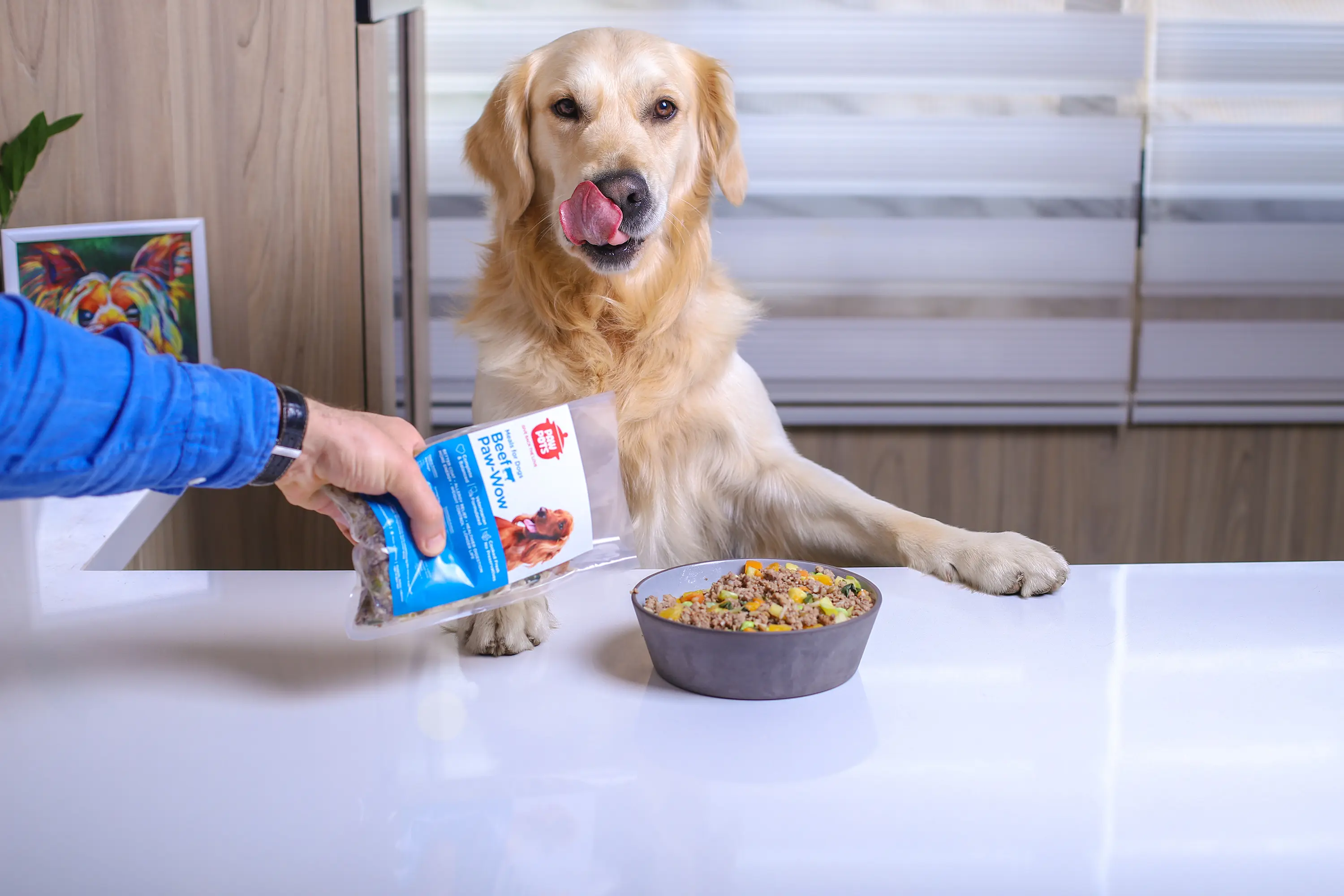
That's how PawPots cooks. Every recipe is human-grade, kettle-cooked in Lebanon, free of artificials, and portioned for your pet. Choose from Tail-Waggin' Chicken, Beef Paw-Wow, Fin-Tastic Fish, Lamb Lickin' Good, and more. Cat parents, this works for you too, with recipes made just for cats.
Got a treat lover? The Chicken & Beef Kaak is oven-baked in Beirut and made with real chicken or beef. Switching foods? Go slow. The PawPots transition pack lets your pet move from the old bowl to the new one gradually.
FAQs
What is dog food made of?
Most dog food combines a protein (like chicken or beef), a carb (like rice, potato, or grains), fats, and added vitamins and minerals. Fresh food uses whole ingredients like real meat, veggies, and seeds. Kibble may add meals, fillers, and preservatives.
Which ingredients should I avoid in dog food?
Skip artificial preservatives (BHA, BHT, ethoxyquin), artificial colors, vague "meat" or "animal" ingredients, heavy fillers at the top of the list, and added sugar or sweeteners. Never feed anything with xylitol.
Is natural dog food better than kibble?
It depends on the label. Natural dog food that uses named meat and whole ingredients is a solid choice. Since "natural" can mean different things, check the ingredient list and the "complete and balanced" statement.
Does AAFCO approve dog food brands?
No. AAFCO sets nutrient standards, but it doesn't approve or certify individual brands. Look for a "complete and balanced" statement that says the food was formulated to meet AAFCO nutrient profiles for your dog's life stage.
What should I do if my dog's food is recalled?
Stop feeding it right away, check the batch details on the bag, and contact the brand. If your dog seems unwell, call your vet. Save the packaging until you're sure about next steps.
Ready for a bowl you can feel good about? Start your PawPots trial and save 50% on a personalized fresh meal plan for your dog or cat, delivered across Lebanon: Start Your Trial
Give Back The Love
Show your love to your pets with our high-quality, delicious and healthy meals!
Show your love to your pets with our high-
quality, delicious and
healthy meals!