



How to Set Up a Feeding Routine for a Newly Adopted Rescue Pet
Author: PawPots Team
 19 Nov 2026
 6 min
Your new rescue just walked through the door, sniffed every corner, and is now staring at their empty bowl like it owes them money. Sound familiar? Most rescue pets arrive with zero info about what they ate before, and a feeding schedule for rescue dog or cat is the fastest way to help them feel safe. Predictable meals tell a nervous pet, “You live here now, and dinner’s coming.” Here’s how to build one that sticks.
Why Rescue Pets Need a Different Start
Rescues often come from shelters, streets, or foster homes where food was random. Some gulp everything in seconds. Others won’t touch a bowl for a day. Both are normal. Your job is to keep things calm, boring, and consistent for the first few weeks. Fancy can wait.
What to Feed a Newly Adopted Dog in the First 3 Days
If you’re wondering what to feed a newly adopted dog on day one, ask the shelter or foster what they were eating and start with that. Even if it’s not the food you plan to use long term, a sudden switch on top of a big move is a lot for a tummy.
Keep portions small
Give smaller meals than you think you need. Stress can mess with appetite, and a nervous dog who overeats may end up with an upset stomach. You can slowly increase the amount as they settle in.
Pick a calm feeding spot
Choose a quiet corner away from foot traffic and other pets. Let them eat in peace, and don’t reach into the bowl. Some rescues guard their food, and giving them space builds trust faster than any treat.
A Simple Feeding Schedule for Rescue Dog
Here’s a routine that works for most adult dogs:
Morning meal: Same time every day, ideally within 30 minutes of when you wake up.
Evening meal: About 10 to 12 hours later.
Bowl time: Leave the bowl down for around 15 to 20 minutes, then pick it up. This teaches them that meals happen at set times, which is great for dogs who’ve known uncertain food access.
Water: Always available and always fresh.
Puppies need more frequent meals, usually three to four a day, so check with your vet for the right amount. If your dog is very thin or has other health concerns, your vet can set a plan that fits them.
Rescue Cat Feeding Routine: Slow and Steady
A rescue cat feeding routine looks a little different. Cats like small, regular meals and a spot they can call their own.
Set meal times: Two to four small meals a day works for most adult cats. Keep the times the same.
Quiet corner: Put food and water away from the litter box. Cats don’t like to eat where they go.
Hideout nearby: A box or covered bed close to the bowl helps a shy cat feel safe enough to eat.
If your cat isn’t eating at all for more than a day, call your vet. Cats can get into trouble quickly when they skip meals.
Transitioning Rescue Pet Food the Right Way
Once your pet has settled for a week or two, you can start transitioning rescue pet food to something new. The key is going slow. A quick switch is one of the most common reasons for loose stools and picky behavior.
Here’s a simple 10-day approach:
Days 1 to 3: 75% old food, 25% new food.
Days 4 to 6: Half and half.
Days 7 to 9: 25% old food, 75% new food.
Day 10: All new food.
If your pet’s stomach acts up, go back a step and stay there a few extra days. Every pet moves at their own pace, and that’s fine.
Kibble vs. Fresh Food for Rescue Pets
This is the big debate for new adopters, so let’s keep it simple.
Kibble: Easy to store, easy to scoop, and usually budget-friendly. The downside is that it’s dry and processed, and some picky rescues don’t find it exciting.
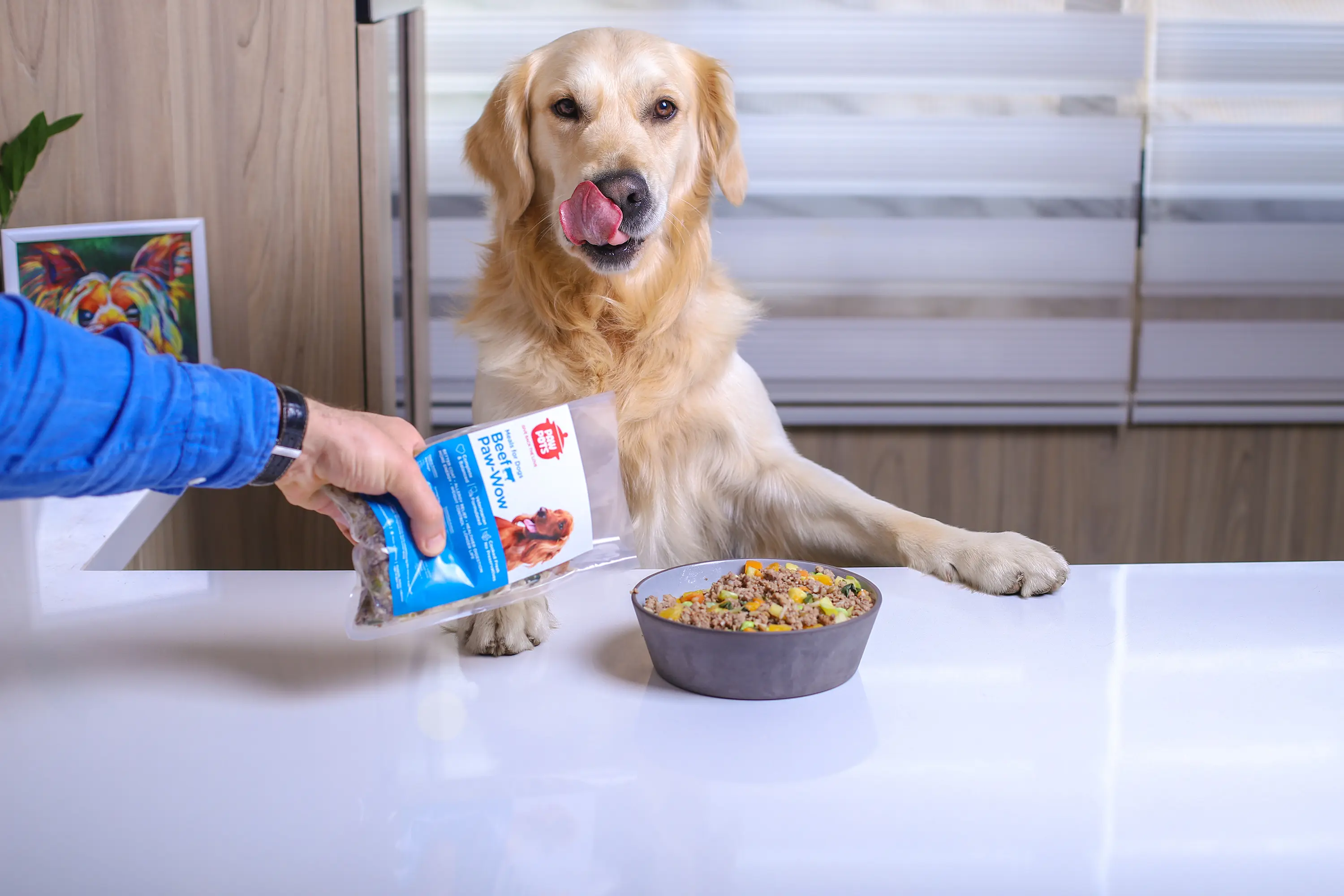
Fresh food: Gently cooked, real ingredients that smell great and often win over fussy eaters. It needs fridge or freezer space and a little planning.
Neither one is automatically wrong. If your rescue is a picky eater or just needs a little extra enthusiasm at mealtime, fresh food can make the whole routine easier. If you go that route, use the same slow switch described above.
Adopted Dog Diet Lebanon: Local Tips
An adopted dog diet Lebanon plan needs to account for summer heat. Beirut and coastal areas get warm and humid, so never leave food sitting out for hours, especially fresh meals. Store extras in the fridge or freezer, and wash the bowl daily. If you live up in the mountains, cooler weather makes bowls easier to manage, but the same clean-bowl rule applies.
Delivery matters here too. Ordering food that arrives at your door means no last-minute store runs when you realize the bag is empty.
Ready to Make Mealtime Easy?
PawPots makes fresh, human-grade meals for dogs and cats, personalized to your pet and delivered right to your door in Lebanon. Head to PawPots to build a meal plan for your new best friend and start your rescue’s routine on the right paw.
FAQs
How many times a day should I feed a rescue dog?
Most adult dogs do well with two meals a day, about 10 to 12 hours apart. Puppies need three to four smaller meals. Your vet can adjust this for your dog’s size and age.
What should I feed a newly adopted dog first?
Start with whatever the shelter or foster was feeding for the first few days. Switch to a new food slowly after your dog settles in.
How long does it take to switch a rescue pet to new food?
About 10 days for most pets. If your pet has a sensitive stomach, take longer and go in smaller steps.
Why won’t my rescue cat eat?
Stress is the most common reason. Give them a quiet spot, keep the routine steady, and try warming the food slightly. If they skip food for more than a day, call your vet.
Should I free-feed or use set mealtimes for a rescue pet?
Set mealtimes are usually better. They build routine, make it easy to spot appetite changes, and help your new pet feel secure.

Give Back The Love
Show your love to your pets with our high-quality, delicious and healthy meals!
Show your love to your pets with our high-
quality, delicious and
healthy meals!